And no, it’s not about the budgets allocated, the trainings scheduled, or the essays written about it.
Inclusion happens in the everyday. In small, almost forgettable moments.
When people wait for you before having tea.
When feedback isn’t asked as a courtesy, but because your opinion actually matters.
I felt that kind of inclusion recently in a meeting—while something was being presented. Not as an afterthought. Not as a checkbox. Just… included. And it stayed with me.
But inclusion isn’t only a workplace idea.
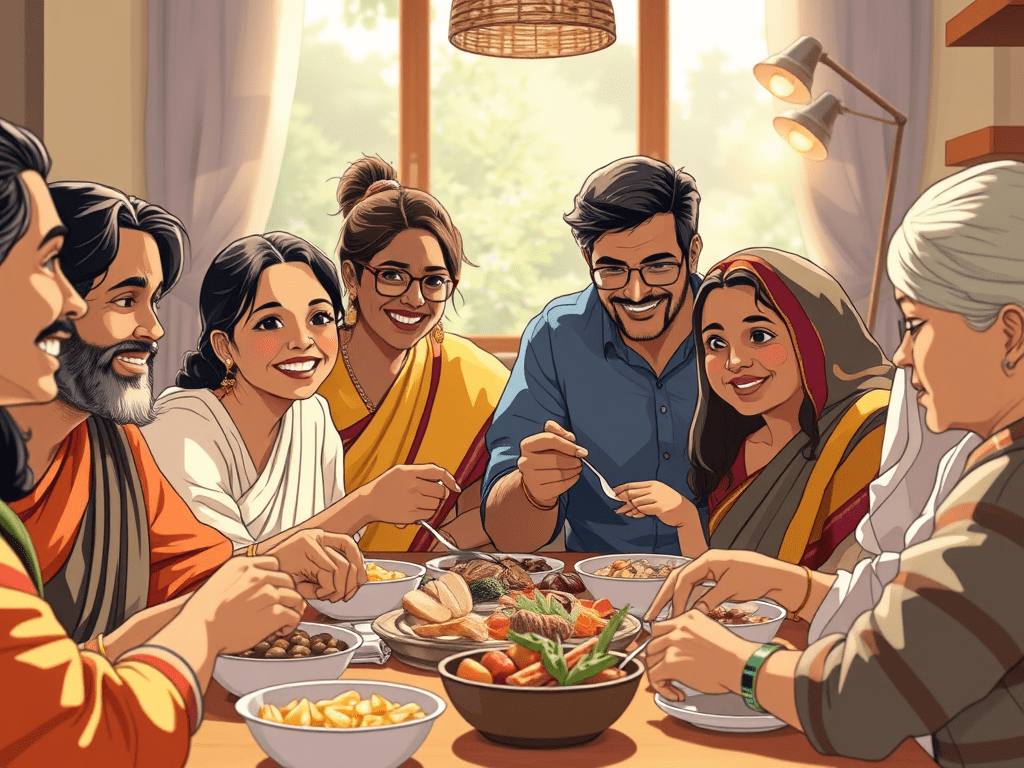
In many ways, Indians are naturally inclusive. We grow up sharing space, food, stories. I remember train journeys where strangers would open their tiffins and invite you to eat—no questions asked. It was a trust-based instinct. You’re here, you’re hungry, so you eat with me.
And yet, inclusion has always had conditions too.
Class, access, affordability. Can you afford the invitation? Can you reciprocate it?
Today, that easy trust feels rarer. We hesitate more. We calculate more. We protect ourselves. Sharing food with a stranger no longer feels instinctive—it feels risky.
Maybe that’s why inclusion looks different now.
Sometimes it’s as simple as being part of a group chat.
A reel shared. A plan mentioned. A quiet “FYI” dropped in.
They say inclusion is being invited to the dance floor.
And yes, that matters.
But I’m realising inclusion is also about what happens when you’re not there.
When people think of you anyway.
As life moves on—through age, distance, changing cities, shifting priorities—being physically present gets harder. You stop showing up everywhere. And you stop asking too.
But when someone still remembers you—
when your mom makes your favorite meal on a hard day,
when friends send pictures from a waterfall because they know you’d love it,
when someone casually says, “I thought of you when this happened”—
that’s inclusion too.
Quiet. Unannounced. Deeply human.
And lately, that’s the kind that matters most to me.



 Between thoughts
Leave a comment